


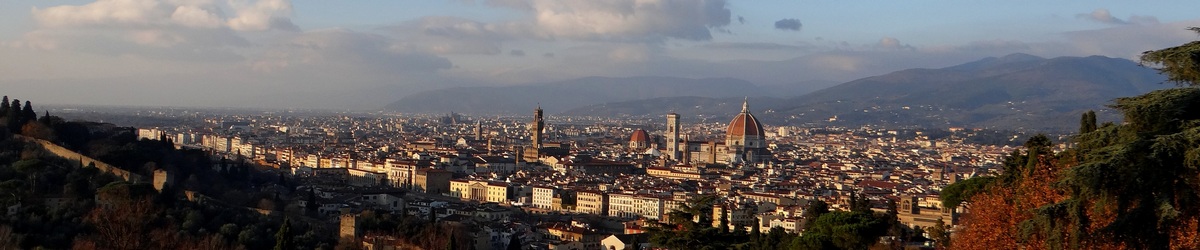
Explore the ancient and modern sides of Germany’s fourth largest city!
Cologne is famous for its cologne. Who knew? Cologne is the French and English name for the German city of Köln.
Cologne has a very, very long history. Founded by the Romans in 50 CE, Colonia Claudia Ara Agrippinensium was the capital of Germania Inferior. The name was later dropped to Colonia, and that is what probably eventually led to its modern name. Cologne is one of the few major Roman settlements to remain inhabited throughout the early medieval period. Cologne became a major trading hub, which continued into the modern period. The city was heavily bombed during WWII. 95% of the city center was destroyed or heavily damaged. The city center is very post-war modern with random historic buildings that had been restored.
My first stop is, of course, Cologne Cathedral. Construction started on the cathedral in 1248, but construction stopped around 1560 without finishing the church. The cathedral was finally finished in the 1880s based on the original medieval plans. (What it looked like in the 1820s.) It’s the third tallest church in the world, and the tallest twin spired church in the world. I ended up visiting the cathedral three times in the same day. It was mostly roped off when I first arrived, then slightly more opened the second time, and finally on the third, it was fully open. I’m combining all the visits together.
 Wandering Jana
 When exiting the main train station, you are greeted by the cathedral. The train station is ugly now, but it wasn’t always that way. The main building survived the war. But no, it was torn down because it had to modernized.
 Wandering Jana
 The spires that weren’t completed until the late 1800s.
 Wandering Jana
 That ugly building on the right is the Romano-Germanic Museum, which was closed for renovation. Why the 1970s thought that building looked wonderful next to the cathedral is beyond me.
 Wandering Jana
 The front of the church is insane.
 Wandering Jana
 The interior is stunning as well.
 Wandering Jana
 Such pretty.
 Wandering Jana
 A view of the entire nave from my second visit.
 Wandering Jana
 The area behind the apse was still closed on my second visit for some unknown reason. According to the sign, it should have been open. I ended up visiting three times.
 Wandering Jana
 Behind the apse are some really cool tombs, like this one of a knight.
 Wandering Jana
 Cologne was a big pilgrimage spot in the Middle Ages because of this shrine, Shrine of the Three Kings. It traditionally holds the bones of the three magi that visited Jesus after he was born.
 Wandering Jana
 The Chapel of the Magi was the original location of the reliquary.
 Wandering Jana
 This was my favorite tomb. It’s so castley.
 Wandering Jana
 The gargoyles are fantastic.
 Wandering Jana
 This is Cologne, a historic building sandwiched between post-war modern.
 Wandering Jana
 The city side of one of the old city gates, Eigelsteintorburg.
 Wandering Jana
 The exterior side. It’s pretty intimidating.
 Wandering Jana
 The very unique St. Maria Himmelfahrt.
 Wandering Jana
 There is a gate blocking off the church from the entrance. I would have loved to explore this one.
 Wandering Jana
 I love that they saved that facade, but they could have gone with something a little less Brutalist.
 Wandering Jana
 Historisches Zeughaus, looks a lot like something one would see in the Netherlands.
 Wandering Jana
 The old Ancient Roman wall. After the Roman period, the city expanded and new walls were built.
 Wandering Jana
 St. Gereon, one of the 12 Romanesque churches of Cologne.
 Wandering Jana
 This church is unique because a large part of it is Ancient Roman. Similar to the Cathedral of Trier, the central part of the church was built in the 4th century as part of a necropolis. The building may have been a mausoleum, but by the 6th century, it was definitely a church.
 Wandering Jana
 On the outside of the Roman core, you can see a bit of exposed Roman masonry. The building was covered with large conches along the exterior. They were “flattened” when the church was turned into an octagon around 1220.
 Wandering Jana
 The nave was added in the 8th century onwards.
 Wandering Jana
 The Upper floors were added in a Gothic style. It was originally only two levels, plus the dome.
 Wandering Jana
 What the Roman building looked like before additions.
 Wandering Jana
 Römerturm, an Ancient Roman tower with preserved mosaic decorations.
 Wandering Jana
 St. Pantaleon, another grand Romanesque church.
 Wandering Jana
 The very castle like Severinstorburg from the 12th century.
 Wandering Jana
 Fancy building from 1676.
 Wandering Jana
 Die Bottmühle, a former windmill and grain mill. The stone windmill is from the 17th century. Mill operations stopped in the 19th century.
 Wandering Jana
 A older style building that really stands out on the Heumarkt.
 Wandering Jana
 Another building that reminds me of the Netherlands.
 Wandering Jana
 A colorful area.
 Wandering Jana
 Another Romanesque church, Groß Sankt Martin (Great Saint Martin Church). That impressive tower dates from 1150-1250.
 Wandering Jana
 The interior really hasn’t changed much.
 Wandering Jana
 Alter Markt (Old Market) is modern, but at least its colorful.
 Wandering Jana
 The Tower of City Hall. There was construction in front of the full building so I couldn’t go see it.
 Wandering Jana
 The next day after exploring Brühl (next post), I found the last city gate that still survives, Hahnentor, from the 13th century.
Even though I had some very gloomy explorations of Cologne, I quite enjoyed it. I didn’t see any museums because the Roman-Germanic Museum is closed, except for a small exhibit somewhere else. Not all that I saw made it in the post. I saw even more churches, Roman remains and a cemetery. There’s quite a bit to do in Cologne.
Check out my next update where I explore a UNESCO site in Brühl!
or
Start at the beginning of this European adventure!
Share this:

Discover more from Wandering Jana
Subscribe to get the latest posts sent to your email.

