


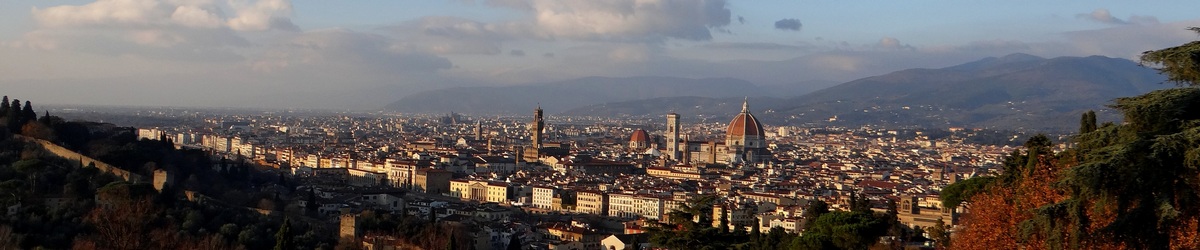
Explorations of a northern German city with a long independence streak.
Bremen, the capital of Bremen (the state), is in the northwestern part of Germany. Bremen was one of the cities of the Hanseatic League that dominated trade in the North and Baltic Seas. In the late 12th century, a group of cities banded together for protection from robbery. It developed into a trading empire that stretched from modern Belgium to Estonia.
Cities that were part of the Hanseatic League tended to be governed by local merchants. By the time that Bremen joined the Hanseatic League in 1358 (they had joined before and had been kicked out), it was a free city within the Holy Roman Empire. Except for Napoleon and Hitler reasons, Bremen has been independent since. The state of Bremen was formed after WWII to continue this independence. It is the smallest state in Germany and it only consists of the city of Bremen, some suburbs, and its modern port (1827) on the North Sea at Bremerhaven.

The landscape around Bremen is very similar to the Netherlands. Dutch settlers came and drained the land for farming, bringing their windmills with them. This is one is fairly close to the train station.
 Wandering Jana
 Marktplatz. A short walk from the windmill finds one right at the center of historic center. The center is a series of connected plazas.
 Wandering Jana
 It’s great.
 Wandering Jana
 The Schütting was originally a guild house used by the city’s merchants and tradesmen, built in the 16th century. It’s currently the Chamber of Commerce.
 Wandering Jana
 Now for the city’s main attraction, the Rauthaus (city hall).
 Wandering Jana
 The city hall and its Statue of Roland are UNESCO sites. Statues of Roland were symbols of freedom in the Holy Roman Empire. Legend goes that the city of Bremen cannot fall if Roland still stands.
 Wandering Jana
 Construction began in the 15th century, but today’s facade is from 16th century renovations in a Renaissance style.
 Wandering Jana
 It’s quite something.
 Wandering Jana
 Looks a little more Gothic on the sides.
 Wandering Jana
 The back of the city hall dates from the 17th century and done in the Baroque style. The entire back of the city hall looked similar to this but part of it was demolished in the 19th century to build the New City Hall.
 Wandering Jana
 You can see the New City Hall behind the Old City Hall at this angle.
 Wandering Jana
 Now for the interior. I booked a tour to get inside. It started in the New City Hall (which is fancy) but I’m skipping ahead here for the main attraction, the Upper Hall.
 Wandering Jana
 Lots going on in here.
 Wandering Jana
 The wood carvings in this room are amazing.
 Wandering Jana
 The most notable feature in the room is this and I can’t find anything on it.
 Wandering Jana
 But it’s intense.
 Wandering Jana
 The whole thing is insane.
 Wandering Jana
 The door leads to this, the Golden Chamber, which was done in 1905.
 Wandering Jana
 Moving on to the Cathedral.
 Wandering Jana
 I quite like the different colors of stones/paint that were used.
 Wandering Jana
 It isn’t a Catholic church anymore, so you won’t see any fancy altars but this is pretty neat.
 Wandering Jana
 The oldest part of the church, the crypt, is from the 11th century. The baptismal font is pretty cool.
 Wandering Jana
 Now for something more modern, the Böttcherstraße.
 Wandering Jana
 It’s a 100 meter long street of very unique buildings building in the 1920s and 1930s.
 Wandering Jana
 Some of the buildings take inspiration from traditional German buildings.
 Wandering Jana
 The entrance to the Böttcherstraße from the river.
 Wandering Jana
 The Gothic St. Martini Kirche (St. Martin’s Church).
 Wandering Jana
 Southeast of the City Hall and cathedral is the the Schnoor, a neighborhood that has preserved its Medieval character.
 Wandering Jana
 Buildings date from the 15th century to the 18th centuries, with a few modern ones thrown in.
 Wandering Jana
 Today, it is known for its shops and eateries.
 Wandering Jana
 So very cute.
 Wandering Jana
 So much cute.
 Wandering Jana
 A building from 1630.
 Wandering Jana
 Back out to the river. On the left you can see St. Martin’s and the Böttcherstraße. Not in this photo but there is a new housing development built on a former industrial area on the right.
 Wandering Jana
 It’s modern, but it does fit in.
 Wandering Jana
 Modern, but it doesn’t stand out. Love it.
 Wandering Jana
 On the way back to the train station, I stopped back at the Unser Lieben Frauen Kirche (Church of Our Lady). This photo is from the morning.
 Wandering Jana
 It’s a mix of Gothic and modern.
 Wandering Jana
 I like the colorful stained glass.
Bremen is a great place to explore, a great day trip from larger cities nearby. Make sure you get a tour of the City Hall. It’s worth it.
Check out my next update where I explore another Hanseatic city, Lübeck!
or
Start at the beginning of this European adventure!
Share this:

Discover more from Wandering Jana
Subscribe to get the latest posts sent to your email.

