


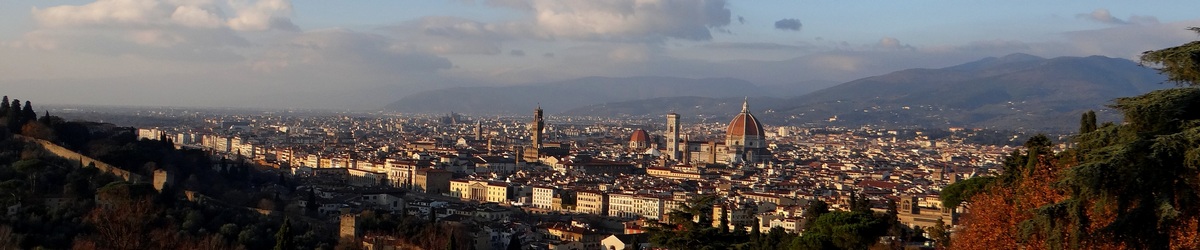
One cannot go to Lisbon without seeing at least a few of these amazing churches!
It would be expected as a capital city that Lisbon would be full of fantastic churches. Good news! It is.
I explored the city center of Lisbon for about 2.5 days. I found so many fantastic churches, that they need their own post. Gothic to Baroque, they are seriously awesome.

Starting out with a church with really bad luck, São Domingos de Lisboa.

It had to be rebuilt after the 1536 earthquake of Lisbon and again after the 1755 earthquake, followed by a fire in 1959.

It was reopened in 1994 but the cracked stonework from the fire remains. I found it really cool.

A quick look at the very pastel São Nicolau de Lisboa.

Nossa Senhora da Conceição Velha and its amazing facade.

Santa Luzia sits at one of Lisbon’s great overlooks.

I will never get enough of azulejos. This one depicts the Conquest of Lisbon in 1147, when Lisbon was retaken by Christians.

Now for one of the best churches in Lisbon, São Vicente de Fora and why Lisbon’s churches get their own post.

It’s a whole monastery complex and everything. This is the monastery’s noble entrance where the important guests were welcomed.

The room is surrounded by these wonderful azulejos scenes.

And so was the cloister.

Based on the figures in the scenes, these are from the 17th-18th centuries.

The church is in the Mannerist style, a late Renaissance style from the 16th century mostly but did exist into the 17th.

This style was followed by the absolutely insane style of Baroque.

Found the Baroque, a later addition.

This is my favorite altar. It’s made of polychrome inlaid marble decoration. It’s typically found more in Italy.

Just amazing.

How about an entire room of polychrome inlaid marble decoration!

This sacristy is just stunning.

The monastery is also the site of the Pantheon of the Braganza Dynasty, the last Portuguese dynasty, lasting from 1640-1910.

The tombs of Carlos I (1863-1908), and his heir apparent, Louis Philippe, Crown Prince of Portugal (1887-1908). They were both assassinated by people that supported a Republican government, instead of a Constitutional Monarchy.

Tomb of Manuel II, son of Carlos I, who inherited the throne at the age of 18. He was the last king of Portugal and was deposed in 1910.

Heading upstairs I found a pretty chapel.

All the hallways and staircases look like this. Sooooo many azulejos.

This dog seems suspicious of its owner.

They let you walk around on the roof of the church. It’s pretty cool.

National Pantheon of Portugal. I never ended up going inside. Totally out of character for me.

The Cathedral of Lisbon, with one of the iconic Lisbon trams.

The tour starts upstairs in the choir. The cathedral’s construction started in the 12th century after the reconquest of Lisbon.

The cathedral was greatly affected by the 1755 earthquake. Much of the church had to be completely rebuilt (1757 appearance). The current appearance dates from the early 1900s. That restoration removed much of the Baroque additions and tried to restore it to the medieval appearance. That included the barrel ceiling above the nave.

The Baroque apse was kept though. That pink ceiling really stands out.

Behind the apse is the Gothic ambulatory.

Some of the chapels in the back have tombs.

The one of the right is my favorite.

Another one like it in a different chapel.

Azulejo-ed baptistery.

In front of the cathedral is the stunning Santo António de Lisboa. It is said that it marks the birthplace of Saint Anthony of Lisbon. He’s known everywhere else as Saint Anthony of Padua (Italy), the patron saint of animals.

Nossa Senhora dos Mártires (Our Lady of the Martyrs). I love that ceiling.

Nossa Senhora do Loreto. Barrel ceilings seem to be very popular in Lisbon.

Directly across the street from that church is Nossa Senhora da Encarnação (Our Lady of the Incarnation).

The ceiling doesn’t quite match the rest of the church but I like it. Unlike Our Lady of Loreto across the street, this ceiling isn’t plaster at all. It’s painted wood. Didn’t even notice until I zoomed in on the ceiling.

This chapel is just stunning.

Last church. São Roque, the earliest Jesuit church in Portugal.

False domes on the ceiling. São Roque was one of the few churches in Lisbon to survive the 1755 earthquake without much damage.

Another church with polychrome inlays.
The churches of Lisbon are amazing. They are pretty uniform in style, mostly Late Baroque (or what I call the pastel period of Baroque), but that is because a lot of churches had to be rebuilt. Doesn’t mean they aren’t all stunning. Some older styles remain and even those are gorgeous. Great place to go see churches.
Tune in for my next update where I will be exploring the Palace of Queluz!
or
Start at the beginning of this adventure!
Share this:

Discover more from Wandering Jana
Subscribe to get the latest posts sent to your email.

