


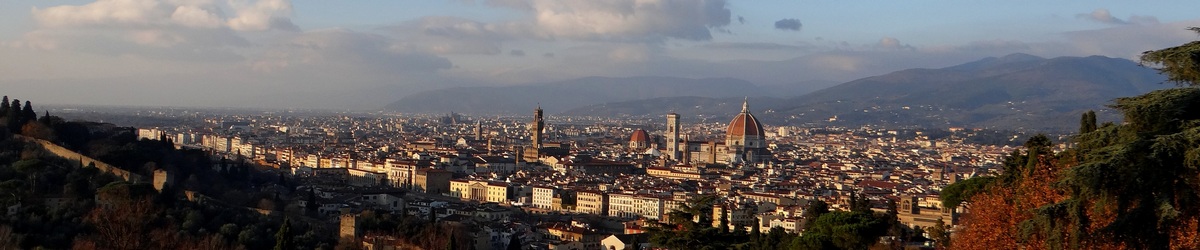
Explorations of a giant combination palace and convent turned hunting lodge, famous for its library!
The Palace of Mafra is located not far from Lisbon, Portugal, making it easily the most visited monument in the country. Mafra is not the fanciest palace, but it is huge with 1,200 rooms. This wasn’t the primary residence of the Portuguese royal family, but it kind of turned into a hunting lodge, a very, very large hunting lodge.
Mafra was born after King João V promised to build a convent if his wife, Maria Anna of Austria, produced a child. She did and the planning began in 1711. Mafra’s location was chosen because there were royal hunting preserves nearby. The royal family mostly used it as a place to stay for hunting and it never had permanent residents.
Construction officially started in 1717. The project started as a simple friary for 13 friars. However, once the riches were flowing in from Brazil, the plan changed to a giant palace and convent.

Just a hunting lodge with a 220 m (721 ft) long facade.

A basilica serves as a center to the complex, with the buildings around being exact mirror images of the other side. The basilica was closed for renovation, so we won’t be heading in there.

Gorgeous cloister at the entrance.

Starting off strong with the King’s Private Oratory. The queen had her own version (almost identical) on the other side of the palace.

The north tower of the palace featured the King’s Private Apartments. The private apartments in this palace are a bit more subdued.

I do like the color scheme though.

A closer look at the antique recliner.

The King’s Bedchamber. The bed was commissioned in 1817 and went on some travels. The bed was shipped from France to Brazil and then shipped to Lisbon.

Now entering the Great Enfilade (Suite of Rooms) which spans the longest palatial corridor in Europe going all the way across the front facade of the palace.

The Room of the Destinies of Portugal. There is a representation of the genealogy of the royal family of Portugal painted on the ceiling.

There’s a lot going on in this room.

The simpler King’s Guards Hall. Archers were stationed here to ensure the king’s safety.

Diana’s Hall, which was named for its ceiling decoration that depicts Diana, the Roman goddess of the hunt and her nymphs.

I quite like this ceiling.

The very bold Throne Hall that was used for royal audiences.

I’ve seen a lot of throne halls in my day and this one really surprised me. It’s really loud. I’m not sure how I feel about this one.

Heading into the corridor in front of the basilica.

The Gallery of the Blessing. Here the royal family and court attended religious services through balconies on the left.

Turns out that the Gallery of the Blessing matches the interior of the basilica. Some major renovation works going on in there.

The Music Room. Here the royal family met with their guests. The last king of Portugal Manuel II ate his last meal here before leaving for exile in England in 1910. The monarchy was overthrown and the country became a republic. Many of the now former royal palaces were named national monuments not long after and preserved.

The Billiard Room. Here the royal family could play Chinese billiards, French billiards and snooker.

Fernando II’s Room. He was the king consort of Queen Maria II and from Germany. He was the cousin of Queen Victoria and Prince Albert of Saxe-Coburg and Gotha. He also liked antlers apparently. Those chairs have to be uncomfortable.

There’s even a whole Hall of Hunting Trophies. This room was not decorated as such until after the downfall of the monarchy. Hunting trophies were originally kept in a room downstairs. You probably forgot that this place was used as a hunting lodge, didn’t you.

Closer look at that chandedeer. I’ll see myself out.

Princess Maria Francisca Benedita Bedroom. The youngest sister of Queen Maria I, she lived in Mafra for a time after her husband died. She died at the age of 83 in 1829.

A fairly simple 19th century dining room.
Now for the main event, the thing the Palace of Mafra is famous for.

Mafra has the largest 18th century library located in a single room. Over 20,000 books are held on its shelves on a variety of subjects.

You can’t go further into the library but I was just happy it was open. It was still closed for renovation when I landed in Portugal. I wasn’t planning on coming to Mafra, but I happened to check out the website and saw it was back open. Plans changed.

Absolutely gorgeous.

There’s even little study nooks by the windows.

You probably also forgot there was a convent here, too.

The convent had space for about 300 friars.

What is probably the only remaining 18th century infirmary in Europe.

The infirmary had 16 cubicles with beds. The beds face the altar so they could attend mass. The patients were cared for by nursing friars, a doctor, and a bleeder. It was the 18th century after all.
The Palace of Mafra is a great place to spend a few hours. It can be reached easily from Lisbon. It’s not the fanciest of the palaces in Portugal, but it sure is great to explore. Oh, and I forgot to mention, the Palace of Mafra is also an UNESCO World Heritage Site.
Tune in for my next update where I finally explore Lisbon!
or
Start at the beginning of this adventure!
Share this:

Discover more from Wandering Jana
Subscribe to get the latest posts sent to your email.

