


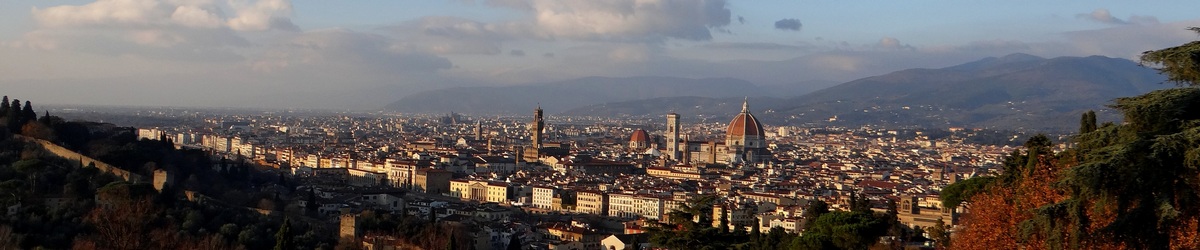
Explorations of a former capital city in Italy.
Pavia is not even close to being one of the most famous cities in Italy, but that doesn’t mean it doesn’t have an extremely lengthy and complicated history all the same. Located about 22 mi (33 km) south of Milan, Pavia was the capital city of various kingdoms, and communes. The city was also ruled by the Roman Empire, the Holy Roman Empire, various noblemen and so on. Even the basic history of Pavia is hard to grasp.
Founded by the Romans, Pavia would become a headquarters for the Ostrogoths after the fall of Rome, capital city of the Lombards and then the capital city of the Kingdom of Italy (part of the Holy Roman Empire) during the early Middle Ages. It was an independent commune for a while and then conquered by a noble family from Milan, the Visconti. And all this before 1400. Pavia would continue to be passed around until around 1859 when it became part of the Kingdom of Italy that would go on to control what we consider Italy today.
Walking around Pavia today, you can see the traces of this complex history in the city.
 Wandering Jana
 It was a bit of a gloomy day.
 Wandering Jana
 Cheese, sausage and boar/pig heads?
 Wandering Jana
 A Carabinieri station in a former Augustine monastery.
 Wandering Jana
 San Pietro in Ciel d’Oro (Saint Peter in Golden Sky), a Romanesque church (12th century) build over a Lombard church (7th century-ish).
 Wandering Jana
 The church is named for the golden mosaic in the apse.
 Wandering Jana
 Under which is the 14th century Arca di Sant’Agostino, the final resting place of St. Augustine of Hippo.
 Wandering Jana
 Santa Maria del Carmine, a example of Gothic architecture in Lombardy. It was built by one of the Visconti.
 Wandering Jana
 Very Italian Gothic.
 Wandering Jana
 Some gorgeous chapels in this church.
 Wandering Jana
 I could not get back far enough to get the entire very tall Cathedral in one photo. A tower that was connected to the church collapsed in 1989.
 Wandering Jana
 Officially named Cattedrale di Santo Stefano e Santa Maria Assunta, the cathedral was built in the 15th century in the Renaissance style.
 Wandering Jana
 The central dome is 318 ft (97 m) tall and is the fourth largest in Italy.
 Wandering Jana
 The church seems cavernous.
 Wandering Jana
 I don’t know who is buried here but that is one fancy tomb. It was probably a bishop.
 Wandering Jana
 I just love the earthy colors the locals have chosen to paint everything.
 Wandering Jana
 Tower house!
 Wandering Jana
 San Teodoro is a typical Romanesque Northern Italian church. Typical until you find some hidden gems like this 12th century mosaic from early in the church’s life.
 Wandering Jana
 There’s some 16th century frescos as well.
 Wandering Jana
 Fresco featuring Pavia’s skyline.
 Wandering Jana
 Part of the old city walls.
 Wandering Jana
 The Ponte Coperto (Covered Bridge) is a reconstruction based on the original 14th century bridge that was severely damaged in WWII.
 Wandering Jana
 Section of the original bridge next to the new one. The new bridge is a bit taller and a bit shorter than the original so it wasn’t an exact reconstruction. Had the bridge been reconstructed today and not in 1949, the original bridge, with repairs, might still be around.
 Wandering Jana
 It’s a bit dark inside.
 Wandering Jana
 The River Ticino.
 Wandering Jana
 Back across the river and I found another tower house.
 Wandering Jana
 Another grand church, San Michele Maggiore, from the 11-12th centuries.
 Wandering Jana
 The carvings around the doors are amazing.
 Wandering Jana
 Close up!
 Wandering Jana
 The carvings include inside.
 Wandering Jana
 All the capitals of the columns are carved as well.
 Wandering Jana
 More carvings near the entrance to the crypt.
 Wandering Jana
 Very cute.
 Wandering Jana
 The Three Towers of Pavia. When they were built in the 11-13th centuries, they were in a dense urban environment and not the open plaza they are in today.
 Wandering Jana
 Walking through the courtyards of the University of Pavia.
 Wandering Jana
 Castello Visconteo di Pavia, the home of the Visconti family.
 Wandering Jana
 When it was constructed in the 14th century, the courtyard was completely surrounded by the immense building. After some battle damage in the 16th century, the building is now U-shaped.
 Wandering Jana
 This awesome building today hosts the local civic museum.
 Wandering Jana
 Some of the rooms still had some frescos.
I wasn’t sure at first if I was going to visit Pavia or not. I had a couple options for the day planned. Since the weather was poor in the Alps, I ended up in Pavia. Honestly, I’m so glad I did. It was a nice easy chill day wandering around the streets of Pavia. I also found some good pizza. Pavia was a great choice.
Check out my next update where I explore the city of Milan!
or
Start at the beginning of this adventure.
Share this:

Discover more from Wandering Jana
Subscribe to get the latest posts sent to your email.

