


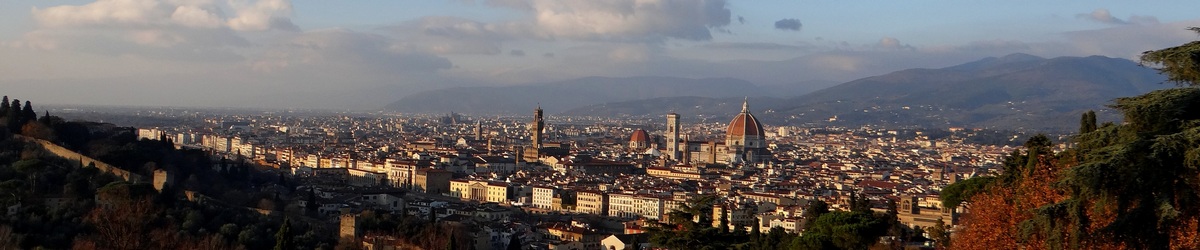
Explorations of the city of Charlemagne.
Aachen is located in the far west of Germany, not far from the borders with the Netherlands and Belgium. The Romans settled here because of its thermal hot springs, which probably also brought the city’s most famous resident there.
Charlemagne (r. 768-814) was the first emperor in the former western Roman empire. The Franks were a Germanic group that rose while the Western Roman Empire was dying, in modern day western Germany, Belgium, the Netherlands and Luxembourg, with Aachen at the center. By Charlemagne’s death, the Franks controlled the lands from Northern Spain to eastern Germany and Austria, down the Italian Peninsula. Charlemagne was hanging around in Aachen years before he made it his capitol later in his reign. He had a huge palace built for himself, of which, only the chapel still survives.
My visit to Aachen was a bit strange. I did not know that they celebrate Carnival in the city (it’s a big deal). Everything was closed my first day for the parade. It was on a Monday, where everything is closed anyways, so I didn’t miss anything. I explored much of the city on foot on the first day and tried to watch the parade. It had some technical difficulties so it was delayed by a lot. One of the floats got stuck at a corner. I got hangry because of the sad lack of food trucks and left. (Maastricht had them everywhere.) The second day I finally went inside of places. The pictures are not in order of what I visited because I was all over the place.
 Wandering Jana
 Down the street from where I stayed was the Marschiertor, one of the two remaining city gates.
 Wandering Jana
 St. Dimitrios, now a Greek orthodox church.
 Wandering Jana
 A cute shopping street.
 Wandering Jana
 The Grashaus, a medieval building, now a museum.
 Wandering Jana
 Now a walk around Aachen’s gorgeous Cathedral.
 Wandering Jana
 Not part of the cathedral but very cool.
 Wandering Jana
 Gothic additions to the much older 8th century church.
 Wandering Jana
 The other side.
 Wandering Jana
 Cute area.
Skipping ahead to the second day when I finally got inside the cathedral. The Aachen Cathedral Treasury (Domschatzkammer) was open first, so I started there. It, of course, has a bunch of Charlemagne stuff.
 Wandering Jana
 Giant reliquary holding the skull cap of Charlemagne, from the 14th century. Charlemagne was canonized in 1000s.
 Wandering Jana
 Reliquary holding the ulna and radius of his right arm, from the 15th century.
 Wandering Jana
 The original sarcophagus of Charlemagne. It’s a reused Ancient Roman sarcophagus. The weirdest thing is that nothing on the label for this piece says what it was later used by Charlemagne. It didn’t find out until later that day why it was there.
Now for the gorgeous cathedral, which was once the palace church of Charlemagne’s Aachen palace, the only remaining part. It was modeled after San Vitale in Ravenna, Italy. It has 16 sides and was clad with marble and colorful stone. The top of the dome originally had a fresco, which was later covered by a mosaic, which was later covered with Baroque stucco, which was later removed and the original design was recreated in the 19th century. The rest of the mosaics date from that time, too. Gothic chapels and an apse were added onto the church in the 14th century, making its shape even more odd.
 Wandering Jana
 The oldest section of the church.
 Wandering
 That recreated dome mosaic.
 Wandering Jana
 Mosaics may be from the 19th century, but I still love them.
 Wandering Jana
 Gorgeous.
 Wandering Jana
 The very Gothic apse.
 Wandering Jana
 I ended up coming back in the afternoon for a guided tour so I could go in the closed off areas. The mosaics on the second floor are even more ridiculous.
 Wandering Jana
 I went on the tour just to see this chair, which is said to be Charlemagne’s throne. Later Germanic kings were also crowned using this throne. It was constructed using marble pieces that had been part of Ancient Roman buildings.
 Wandering Jana
 The tour also takes you into the apse, where Charlemagne’s new fancier sarcophagus is. There’s probably not much left of him after all those reliquaries. His tomb was opened up and most of his face is missing, but they could tell he was about 6 ft tall and thin.
 Wandering Jana
 Back to day 1 for more exploration. The Granusturm is attached to the Rathaus (town hall). I need to have a conversation with whoever decided the design on the addition on the left.
 Wandering Jana
 The back side of the Rathaus, which was built on the remains of Charlemagne’s palace.
 Wandering Jana
 The really fancy side of the Rathaus (from day 2).
 Wandering Jana
 Couven-Museum displays 18th-19th century furnishings in a 17th century house (from day 1, told you the pictures jump around a lot).
 Wandering Jana
 Got inside on day 2. This was my favorite room.
 Wandering Jana
 My second favorite is a lot like my favorite. These were the fanciest rooms in the museum.
 Wandering Jana
 There was also two rooms full of tiles.
 Wandering Jana
 Ponttor, the other medieval gate.
 Wandering Jana
 Some of the homes and buildings on this side of town are super fancy.
 Wandering Jana
 I climbed a steep hill to see this very robust/towery church, Salvatorkirche.
 Wandering Jana
 The small bit of the Carnival parade that I saw before the issues started.
 Wandering Jana
 Westfriedhof. After solving my hangry problem, I decided to find a nice quiet place to go. Yep, it’s a cemetery.
 Wandering Jana
 The best part was the interior of the previous building.
 Wandering Jana
 I was not the only one walking around. Germans treat cemeteries like quiet parks. I was never the only person in any cemetery.
I really enjoyed what I saw while in Aachen. I had wanted to go see the cathedral for years. It was worth the journey. Just don’t go during Carnival.
Check out my next update where I visit country #25, Luxembourg!
or
Start at the beginning of this European adventure!
Share this:

Discover more from Wandering Jana
Subscribe to get the latest posts sent to your email.

