


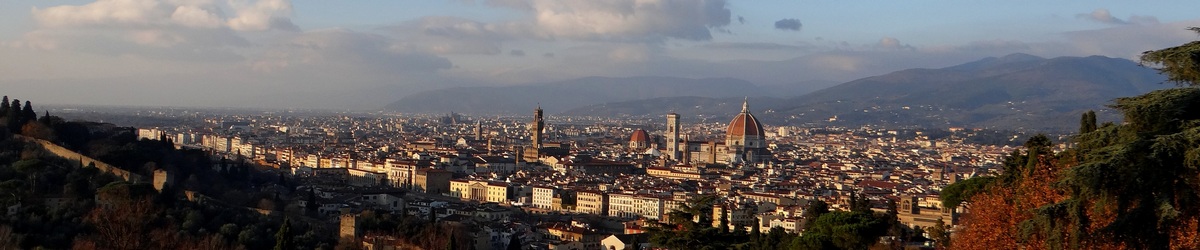
Explorations of a Baroque city at the foot of Mt. Etna.
Who would put a city next to a very active volcano?!? Well, the Greeks.
Catania was founded by Greek settlers in the 8th century BCE and there has been a city here every since. People were drawn to the great soils that surround Mt. Etna and decided to put up with one of the world’s most active volcanoes.
 Wandering Jana
 It is really hard to get a photo of Mt. Etna from Catania, unless you pay to climb a building, which I didn’t think to do until it was too cloudy. This is from the bus from Ragusa.
A large eruption spewed lava over a good portion of Catania in 1669. The city was only saved because of the city walls. However, a major earthquake followed in 1693 devastating the city. As a result, Catania, like other eastern Sicilian cities (Noto, Syracuse, Ragusa, etc.), was rebuilt in the Baroque fashion popular at the time. And this is why I went to Catania.
 Wandering Jana
 Piazza Università in the heart of Baroque Catania. As the name of the plaza suggests, this building is part of the University of Catania.
 Wandering Jana
 The peak Baroque Basilica Cattedrale di Sant’Agata.
 Wandering Jana
 It’s a bit more subdued inside though.
 Wandering Jana
 All very Baroque.
 Wandering Jana
 Mt. Etna peaking out from behind the buildings.
 Wandering Jana
 Chiesa della Badia di Sant’Agata, the church of a Benedictine abbey.
 Wandering Jana
 That chandelier is massive.
 Wandering Jana
 There were three churches near this same intersection.
 Wandering Jana
 Looking down.
 Wandering Jana
 Villa Cerami once sat at the edge of the city. It is now used for the University of Catania, but the garden is open to explore.
 Wandering Jana
 Piazza Giuseppe Mazzini has almost identical buildings on every corner. The cathedral is peaking through.
 Wandering Jana
 Construction of San Nicolò l’Arena started in the 17th century. It obviously was never finished. The church is part of a large monastery complex.
 Wandering Jana
 It took until 1796 to finish the dome.
 Wandering Jana
 The altar area was pretty neat.
 Wandering Jana
 Next door to the church is the Monastero di San Nicolò l’Arena. It was the second largest Benedictine monastery until it was confiscated by the Italian state. Today, it is part of the University of Catania and part of a UNESCO World Heritage Site.
 Wandering Jana
 The building is simply gorgeous inside and out.
 Wandering Jana
 Just look at that fanciness.
 Wandering Jana
 Just one of the cloisters. I’m glad I took a tour.
 Wandering Jana
 On the left is part of the 1669 lava flow. The monastery was rebuilt after the earthquake, incorporating some of the new terrain.
 Wandering Jana
 The main staircase is really something.
 Wandering Jana
 It’s a lot.
 Wandering Jana
 The Ancient Roman Theater was probably built around the 2nd century CE. It could have accommodated 7,000 spectators.
 Wandering Jana
 It wasn’t fully excavated until the 19th century. Buildings were built into the structure of the ancient theater.
 Wandering Jana
 The theater today is almost completely surrounded by “newer” buildings.
 Wandering Jana
 The vomitoria or exit passageways.
 Wandering Jana
 The 19th century Teatro Massimo Bellini.
 Wandering Jana
 The next morning, after many delays, I made it to the Monumental Cemetery of Catania.
 Wandering Jana
 The older sections were very few. Most of the cemetery is modern.
 Wandering Jana
 The cemetery is dominated by giant columbaria that look like office buildings built after WWII.
 Wandering Jana
 This one is a bit different.
 Wandering Jana
 Catania’s Castello Ursino, a 13th century castle that now hosts the city museum.
 Wandering Jana
 What remains of the Roman Amphitheater, built around the 3rd century.
I had been to Catania’s airport before, but never really stopped inside the city. I’m glad I did this time. There is a lot to explore in Catania and in the neighboring region, a perfect spot for Mt. Etna excursions.
Check out my next update where I explore another Sicilian city, Messina!
or
Start at the beginning of this adventure.
Share this:

Discover more from Wandering Jana
Subscribe to get the latest posts sent to your email.

